


AeroGain Armrests


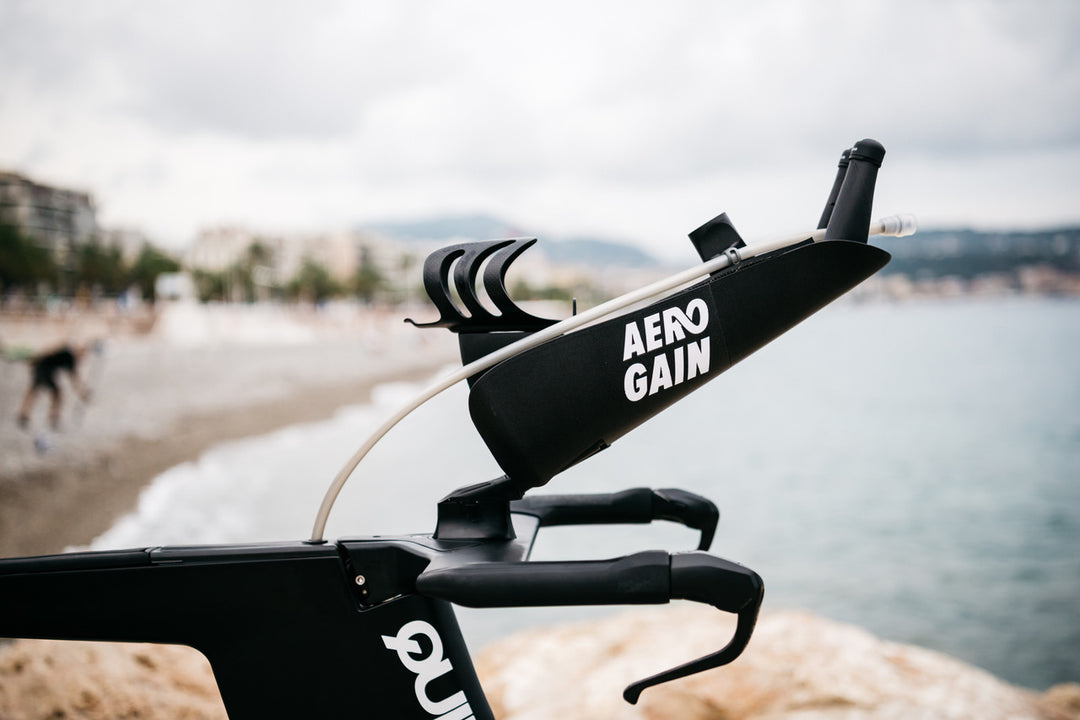




Armrests built to hold the position
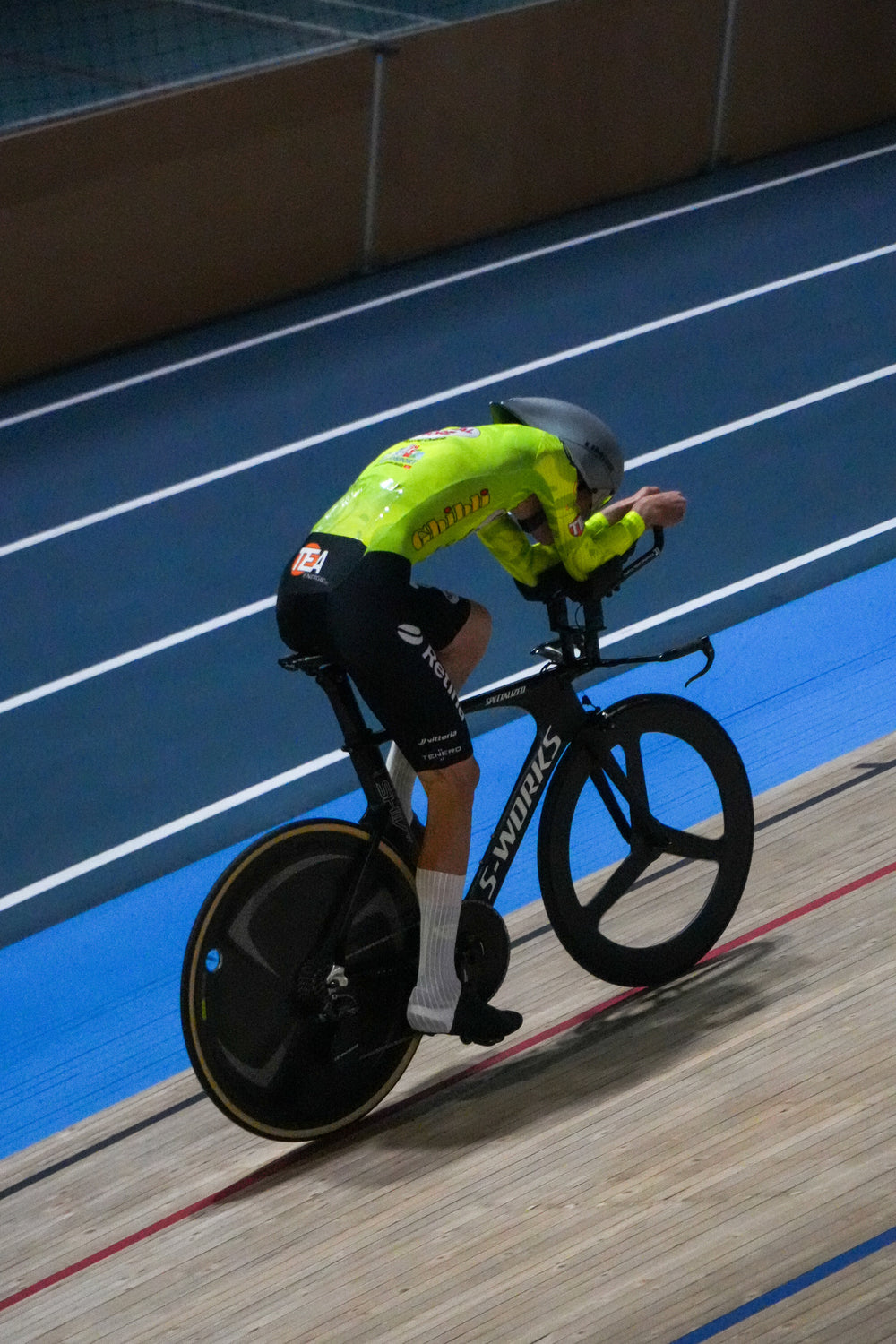
The fastest aero position is the one you can still hold at hour four. Armrests are the contact point that decides whether that happens. Get them right and your shoulders stay quiet, your head stays low, and the rest of your aero setup actually does its job. Get them wrong and the position you tested in the lab disappears halfway through the bike split.
Why armrests are an aero decision, not a comfort decision
A rider's body produces around 80% of the drag on a TT bike. The way you sit on the bike — and whether you can keep sitting that way for the full duration of a race — matters more than almost any single piece of equipment. In our own back-of-the-envelope modelling for a 180 km Ironman bike leg, a position that quietly degrades through shoulder tension and sit-ups costs eight to seventeen minutes of bike split, with the same power on the same course.1
Armrests don't make that go away by being comfortable. They redistribute load so you can brace through your forearms instead of clamping through your shoulders. The shoulders stay quieter, the head stays still, and the aerodynamic shape you came to ride stays intact for the back half of the race.
What an AeroGain armrest gives you
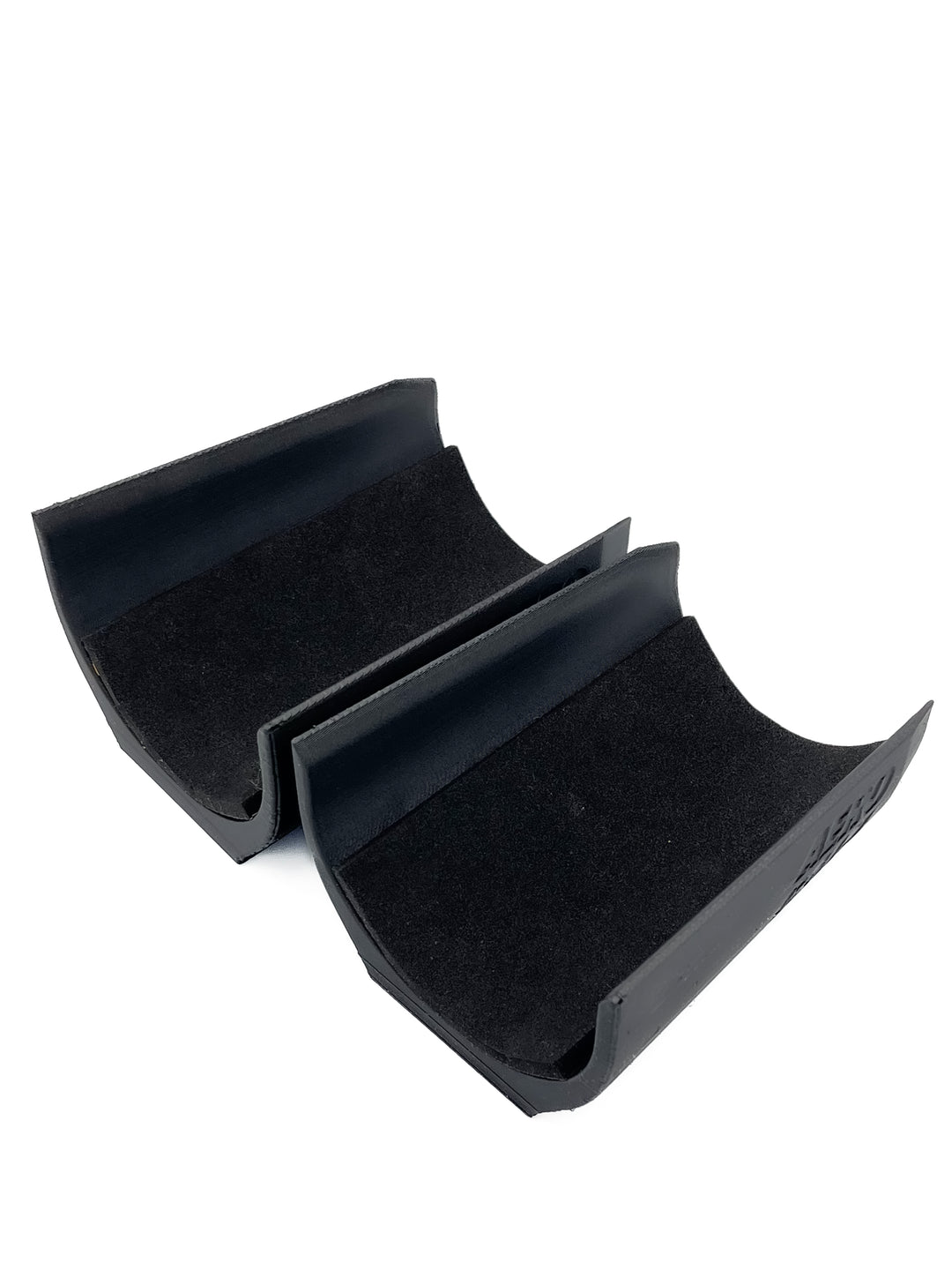
- High-sided pad shape that wraps the forearm — you rest into it, not on top of it
- Holds your aero position longer with less shoulder, neck and upper-back fatigue
- Returns you to the same position after every drink, aid station and re-mount
- Mounts onto a standard AeroGain aero cockpit or most common TT cockpit clamp standards
Choosing your armrests
The collection covers four shapes — High-Sided (the default), High-Sided Tri (with the BTA cutout), Dual-Sided, and a single-piece Custom Mono. Most riders want the High-Sided pair: deeper wrap, less clamping. If you ride with a wider grip or you want to be able to slide your forearms freely on rough roads, the Dual-Sided is more forgiving. Mono works best for riders with very narrow extensions where two separate pads would overlap.
If you're not sure which shape fits your forearm and your current pad stack, send us a side-on photo of your aero position — we'll point at the right one.
Frequently asked
What's the difference between high-sided, dual-sided and mono armrests?
High-sided pads wrap up around the outside of your forearm — you brace into them and the shape does the holding. Dual-sided pads have a smaller side wall on both inside and outside — they let the forearm move more freely, useful on rougher courses or with wider arm positions. Mono is a single continuous pad across both extensions — useful for very narrow setups where two pads would overlap. For most triathletes, the High-Sided pair is the starting point.
Will AeroGain armrests fit my existing cockpit?
They mount onto AeroGain cockpits directly and onto most standard TT/triathlon armrest mounting plates (4-bolt and similar patterns). If you're on a fully integrated proprietary cockpit, send us a side-on photo of your current armrest mounting — there's usually a fitment that works, but worth a 30-second check before ordering.
¹ Modelled on a representative age-group triathlete: CdA ~0.23 m², 200W average, 180 km flat course, baseline split ~4 h 44 min. Sources: AeroGain in-house whitepaper, 8 Ways to Cut Minutes Off Your Bike Split. Full assumptions available on request.