
Sistema Aero BTA
Sistema Aero BTA
Sistema Aero BTA
Sistema Aero BTA
Sistema Aero BTA
Sistema Aero BTA
Sistema Aero BTA
Sistema Aero BTA
Sistema Aero BTA
Sistema Aero BTA
Sistema Aero BTA
Sistema Aero BTA

Sistema Aero BTA

Progettato per ridurre la resistenza dove conta
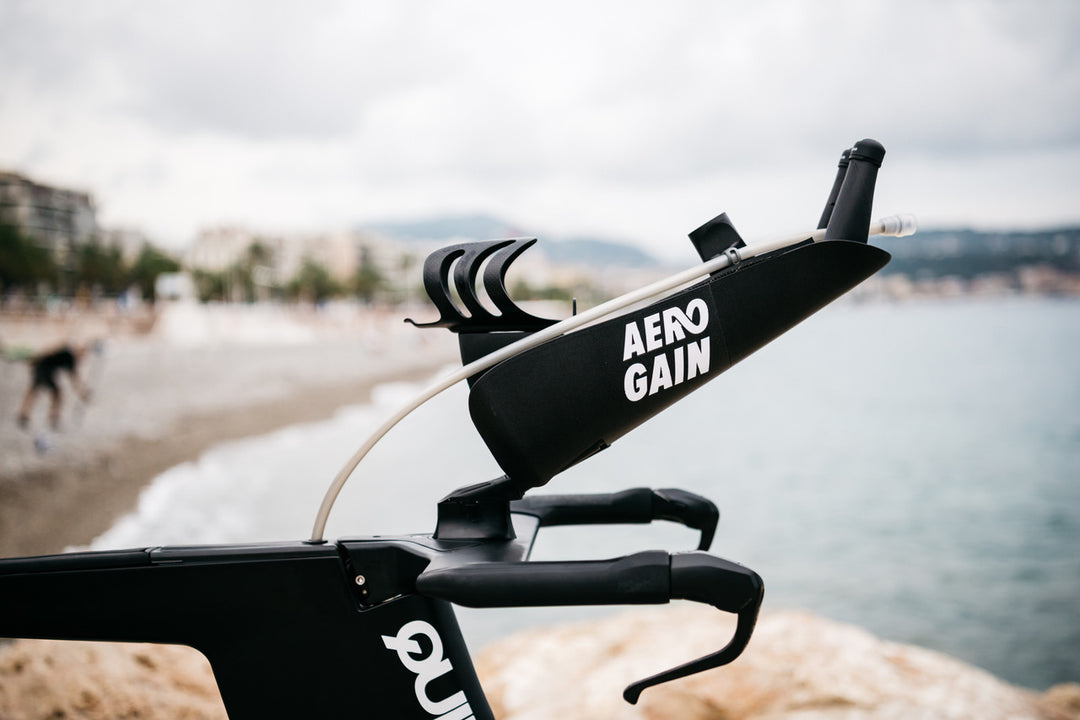
Questo sistema migliorato Between/Behind-The-Arms (BTA) posiziona la tua borraccia esattamente dove serve, appena dietro i gomiti o vicino al petto, offrendo fino a 10 W di guadagno aerodinamico a 45 km/h

Nessuna sciocchezza, solo pura performance
Progettato per agganciarsi perfettamente ai ponti portaborraccia standard e alle barre aerodinamiche, il suo aspetto pulito e integrato si adatta a un cockpit minimalista, offrendo al contempo distanziali multi-angolo (0°, 10°, 15°, 20°) per una configurazione precisa. Scegli il distanziale che rispecchia il tuo angolo di estensione e la tua borraccia sarà solida come una roccia e perfettamente orizzontale.

Modulare, personalizzabile e pronto per la gara
– Scegli l'altezza e la spaziatura dei bulloni (media/larga/extra larga).
– Si adatta alla maggior parte degli ecosistemi tri-bar
– Struttura resistente, elegante finitura nera opaca: minimalista all'esterno, massima funzionalità da gara all'interno.

Quando la vittoria si decide ai margini
Scelto dall'élite, il BTA di AeroGain non è solo un accessorio: è un sistema per coloro che inseguono ogni watt e prosperano sulla velocità

Prezzo di listino€169,90 EUR
/
Imposte incluse. Spedizione calcolata alla cassa.

  • In magazzino, pronto per la spedizione
  • In arretrato, spedizione a breve
  • Express worldwide shipping with FedEx — 1–4 business days
  • 30-day returns
  • 2-year warranty
  • Crash replacement

Pairs well with

The numbers — velodrome-tested, not marketed

14 W

Median gain from moving two bottles off the frame and between the arms: you stop paying 6 W and start collecting 8 W. On the averages it is 15 W, and 26 W in the best case we measured.

8 W

Median saving versus riding with no bottles at all, across 35 athletes at 45 km/h. The best measured result was 14 W.

6 angles

Angle-matched spacers at 0°, 10°, 15°, 20°, 25° and 30°, so the bottle sits level whatever your extensions are doing.

Nobody questions where the bottle goes

Triathletes will spend hundreds on a helmet or a wheelset chasing single-digit watt savings. Then they clip a cage onto the down tube, because that is just where cages go, and never measure what it costs.

The down tube sits in an otherwise clean airflow path between your legs. A bottle parked there disrupts that clean air instead of hiding inside it — two 750 ml bottles on the frame cost an average of 7 W at 45 km/h in our own velodrome testing, and 12 W for the worst position we measured. It is a habit nobody questions, and it quietly taxes every ride you take.

It’s not the bottle. It’s the gap it fills.

01 — The dead air

In an aggressive aero position, a pocket of separated, turbulent air sits in the gap between your forearms and your chest. This is dead air — flow that has already detached from the body and is stalling instead of moving cleanly past it. Aerodynamically, that pocket is expensive.

02 — Filling the gap

Place a bottle between the arms, close to and parallel with the chest, and it fills that exact gap. Air that would otherwise separate and stall is guided smoothly around your whole body instead. The bottle stops being an obstruction and becomes part of the airflow. It also sits where you can reach it without coming out of aero — no repeated sit-ups to drink over the course of a race.

03 — Why the down tube does the opposite

A bottle mounted on the down tube sits in a path of air that was already flowing cleanly between the legs. Putting a bottle there doesn’t fill a gap — it creates a new obstruction where none existed. That is exactly why frame-mounted bottles add drag instead of removing it: an average of 7 W for two of them at 45 km/h, and 12 W in the worst case we measured.

The data

We published the whole test, not the flattering slice of it. 35 athletes, four bottle setups, one velodrome — measured at race speed, not modelled. Here is what a bottle on the frame costs you, and what moving it between the arms gives back.

Bar chart of power saved at 45 km/h versus riding with no bottles across four setups tested on 35 athletes at Ballerup Super Arena: two 750 ml bottles on the frame at minus 6 W median, single bottle between the arms at 4.5 W, double-bottle BTA at 8 W, and double-bottle BTA with the top bottle further back at 7.3 W
Power saved at 45 km/h versus riding with no bottles at all. Two 750 ml bottles on the frame cost a median of 6 W. A single bottle between the arms returns a median of 4.5 W; a double-bottle BTA returns 8 W, and 7.3 W with the top bottle further back. Bars show the group average, whiskers the spread across riders.
6 WMedian cost of two 750 ml bottles on the frame, versus running no bottles at all. The average is 7 W, and the worst case we measured was 12 W.
8 WMedian saving for the Aero BTA versus no bottles at all. The best measured result was 14 W.
14 WMedian total gain from switching two frame bottles to the Aero BTA — you stop paying 6 W and start collecting 8 W. On the averages it is 15 W.
26 WBest case measured: the worst frame position (12 W) combined with the best BTA result (14 W). The ceiling, not the expectation.
  • Average results of 35 athletes tested on the velodrome at Ballerup Super Arena, Copenhagen.
  • Test speeds between 35 and 50 km/h.
  • Baseline CdA between 0.165 and 0.237.
  • Median values: −6 W, 4.5 W, 8.0 W and 7.3 W for the four setups, in the order shown.
  • Two frame-mounted bottles cost an average of 7 W and a median of 6 W, with a worst measured case of 12 W.
  • The best measured Aero BTA result was 14 W. Not all riders tested all four setups.
  • Bars show the group average; whiskers show the spread across riders. Individual results vary with position, bottle size and yaw.

Our newest and fastest BTA system

Engineered to cut drag where it counts
This upgraded Between/Behind‑The‑Arms (BTA) system positions your bottle exactly where it matters—just behind the elbows or tucked close to the chest—returning a median of 8 W at 45 km/h versus riding with no bottles at all, and up to 14 W in the best result we measured. Two 750 ml bottles on the frame cost you a further 6 W at the median, so switching is worth a median of 14 W, an average of 15 W, and 26 W in the very best case. The added nose-cone provides an added drag reduction compared to our previous designs.

Performance-centric design
Designed to seamlessly clamp onto standard pad bridges and aero bars, the clean, integrated look matches a minimalist cockpit, while offering multi‑angle spacers (0°, 10°, 15°, 20°, 25°, 30°) for precise setup. Pick the spacer that mirrors your extension angle, ensuring your bottle is perfectly horizontal. (See video below on how to gauge compatibility, and how to choose the right angle).

Modular, customizable, and race‑ready
– Choose your height and bolt‑spacing (medium/wide/extra‑wide).
– Fits most tri‑bar ecosystems
– Durable build, sleek matte black finish—minimalist outside, maximum race‑mode inside.

Why it’s faster

By closing the gap between the arms and the chest, the AeroGain BTA system guides more air around your whole body, reducing your overall aerodynamic drag, making you go faster for the same power output. Figures from AeroGain in-house velodrome testing at Ballerup Super Arena, Copenhagen: average results of 35 athletes, test speeds between 35 and 50 km/h, baseline CdA between 0.165 and 0.237, reported as power saved at 45 km/h versus riding with no bottles at all. Not all riders tested every setup. Test conditions available on request.

Built to sit exactly where the gap is

01 — Modular spacer system

Angle-matched spacers at 0°, 10°, 15°, 20°, 25° and 30°. The bottle sits horizontal regardless of your extension angle. Most one-piece BTA mounts don’t adjust at all, so the bottle ends up tilted to whatever angle your bars happen to be at.

02 — Three width fits

Medium (52–148 mm pad-bridge width), Wide (148–198 mm) and Extra Wide (above 198 mm). Covers most tri-bar setups without custom fabrication or filing parts down to fit.

03 — Integrated nose-cone

A shaped nose-cone leads the airflow into the arm-chest gap instead of presenting a blunt bottle face to it. Measurably less drag than AeroGain’s earlier, non-nose-cone BTA design.

04 — Clamps to standard pad bridges

The base plate mounts underneath your existing armrest pads — your current armcups do the clamping, so there are no extra brackets and no pad swap. Matte black finish, and it takes one or two bottles on the same mount.

Take these two measurements before you order

Two measurements determine your exact fit: the angle of your extensions, and the width of your armpad bridge. Get both right and the bottle sits horizontal and centred between your arms.

1

Match your spacer to your extension angle

Your spacer angle has to match the upward tilt of the whole assembly — mounting bracket and clip-on extensions together, not just the extension. Match the spacer to that angle and the bottle sits level between your arm pads: extensions horizontal (0°) → the 0° spacer; tilted up 20° → the 20° spacer; a steep 30° tilt → the 30° spacer.

Not sure of your angle? Rest your phone’s built-in level tool (Apple’s Measure app, for instance) flat against your extensions to read the exact degree.

Technical line drawings of an AeroGain BTA mount carrying two bottles at 0, 20 and 30 degree extension angles, showing how a spacer matched to the extension angle keeps the bottles horizontal
Left: the whole assembly seen on the bike. Right: the spacer wedge that matches it. At 0° the extensions are level and the 0° spacer keeps the bottles level; at 20° and 30° the matching spacer cancels the tilt so the bottles stay horizontal instead of pointing at the sky.
2

Measure your armpad bridge width

Measure from mounting bolt to mounting bolt across your armpad bridge, then pick the matching plate width: Medium 52–148 mm, Wide 148–198 mm, Extra Wide 198–238 mm.

Technical line drawing of a triathlon cockpit seen from above, with arrows marking the bolt-to-bolt distance across the armpad bridge that determines which AeroGain BTA mount plate size to order
Measure between the centres of the two mounting bolts, straight across the armpad bridge. That single dimension decides your plate size — Medium, Wide or Extra Wide.
How it mounts

The BTA base plate mounts underneath your existing armrest pads — it is sandwiched directly beneath the armcups, which clamp down and hold the plate firmly in place. No extra brackets, and no swapping your pads: your current armcups do the clamping.

Plate width chart
FitBolt-to-bolt pad-bridge width
Medium52–148 mm
Wide148–198 mm
Extra Wide198–238 mm
Tools and install

Standard allen keys, a few minutes, no special tools. Choose your plate width and spacer angle from the dropdowns above before ordering.

This started as a bottle stuffed down a race suit

We didn’t just theorise this. The aero gain was discovered by accident, used at the highest level of the sport, then banned — and the Aero BTA system is the engineered, legal successor to a technique that already proved itself.

2022

AeroGain founder Kristoffer Visti first experimented with carrying a bottle stuffed down the front of his race suit at the Danish National Championships, discovering the aero benefit by accident — not from a wind tunnel, from racing.

Later that year

Triathlete Magnus Ditlev used the same technique at the Ironman World Championship in Kona — the same principle, now on the world’s biggest triathlon stage.

Early 2024

World Triathlon and Ironman banned the in-suit technique, for safety and uniformity reasons. The aerodynamic principle wasn’t in question — the method of carrying it was.

The successor

The Aero BTA system was developed as the engineered, legal answer — same aerodynamic principle, filling the gap between the arms and chest, now properly mounted instead of stuffed into a suit. What was once a rule-bending hack is now a velodrome-tested mount.

Built for tri-bar cockpits and riders who measure things

This is for you if

  • You race on a dedicated TT or triathlon bike with a tri-bar cockpit and pad bridge.
  • You already know your FTP and think in watts, not vibes.
  • You’ve optimised your helmet and wheels and want the next real gain, not a marginal-gains platitude.
  • You want a mount that adjusts to your actual extension angle instead of forcing your position to match the mount.

This isn’t for you if

  • You ride a road bike with no clip-on aero bars and no pad bridge to clamp onto.
  • You want to carry two bottles up front with flexible fore-aft positioning — look at the Double Bottle BTA system V2 instead.
  • You’re after a rear, behind-the-saddle hydration and storage system — that’s the Aero BTS PRO, a different product.
  • You want a one-piece mount and don’t care about angle-matching.

If your cockpit has a pad bridge and you care about the number, this is built for exactly that setup.

Fit and installation, answered

The Aero BTA system clamps onto standard pad bridges and tri-bar systems, in three width fits: Medium (52–148 mm pad-bridge width), Wide (148–198 mm) and Extra Wide (above 198 mm). Measure bolt-to-bolt across your armpad bridge before ordering — the sizing chart is in the setup guide above.

Yes, as long as your clip-on aero bars have a pad bridge to clamp onto — the same width and angle fits apply. It isn’t designed for road bikes without clip-ons.

Yes, the mount supports single or dual-bottle setups. If you want flexible fore-aft positioning for the second bottle — forward between the arms for maximum aero, or further back towards the chest — look at the Double Bottle BTA system V2, which has a redesigned top section built for that.

That’s what the spacers are for. Angle-matched spacers at 0°, 10°, 15°, 20°, 25° and 30° mean you pick the one matching the tilt of your whole extension assembly, and the bottle sits horizontal regardless of your position.

No. It installs with standard allen keys in a few minutes — no special tools required. The base plate goes underneath your existing armrest pads, so your current armcups do the clamping and there is nothing to swap out.

AeroGain’s own velodrome testing at Ballerup Super Arena, Copenhagen — 35 athletes, test speeds between 35 and 50 km/h, reported as power saved at 45 km/h versus riding with no bottles at all. Not a single-rider tunnel run and not a CFD simulation. The Aero BTA median was 8 W and the best measured result 14 W. Two frame bottles cost an average of 7 W, a median of 6 W, and 12 W in the worst case — so switching is worth a median of 14 W, an average of 15 W, and 26 W at best. We quote the median alongside the ceiling because the honest range is the more useful number.

There is a 30-day satisfaction guarantee: return an unused unit in its original condition and packaging for a refund. Confirm your pad-bridge width and extension angle before ordering to avoid a fit mismatch in the first place.

All aero figures from AeroGain in-house velodrome testing at Ballerup Super Arena, Copenhagen: average results of 35 athletes, test speeds between 35 and 50 km/h, baseline CdA between 0.165 and 0.237, reported as power saved at 45 km/h versus riding with no bottles at all. The Aero BTA median saving is 8 W and the best measured result was 14 W. Two 750 ml bottles on the frame cost an average of 7 W and a median of 6 W, with a worst measured case of 12 W. Switching from two frame bottles to the Aero BTA is therefore worth a median of 14 W, an average of 15 W, and 26 W in the best measured case. A single bottle between the arms returns a median of 4.5 W; a double-bottle setup with the top bottle further back returns 7.3 W. Not all riders tested every setup. Individual results vary with rider position, bottle size and yaw. Test conditions available on request.

Velodrome-tested in Denmark

Stop losing watts to a bottle you never measured

Median 8 W saved versus riding with no bottles, and up to 14 W at best. Two frame bottles cost you 6 W more on top — so switching is worth a median of 14 W, an average of 15 W, and 26 W in the best case we measured. Single or dual-bottle setups, six spacer angles, three plate widths.

Made and tested in Denmark · Express FedEx shipping · 30-day satisfaction guarantee

Shop the Aero BTA system

You may also like